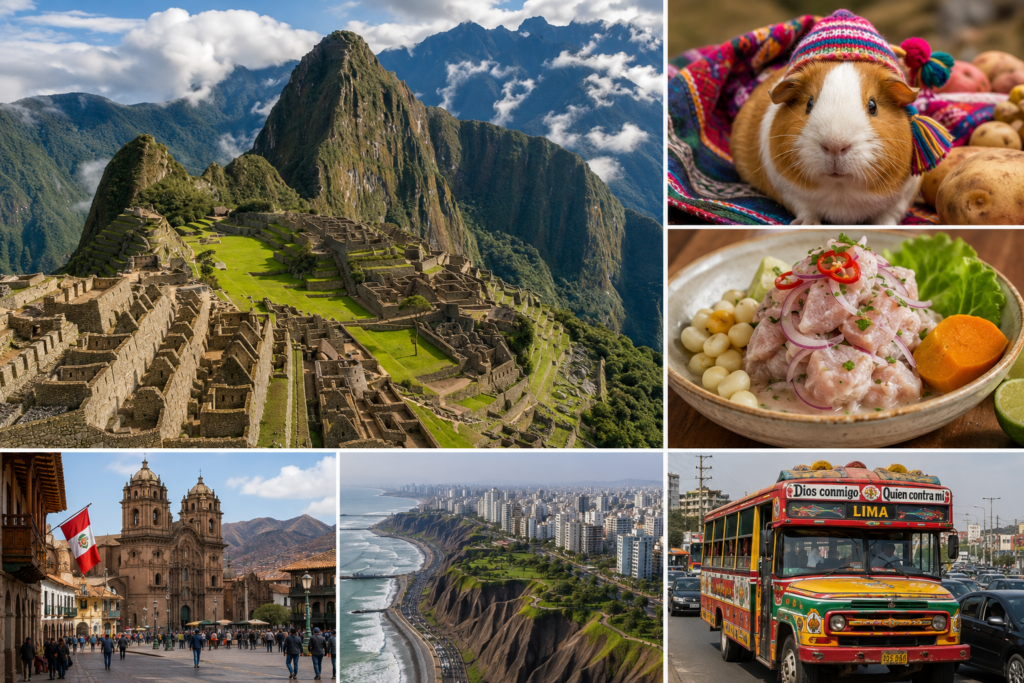
After the Galapagos, we were off to Peru to visit Cusco, Machu Picchu, and Lima. Again, I give you the stuff omitted from or underreported in the travel guides.
Dress Appropriately
While Cusco and Machu Picchu are also near the equator, the combination of mountains, elevation, and sun subjects the inhabitants to highly variable temperatures. You switch from a parka to a Speedo and back to a parka in the course of a day. Midday, the sun broils the land, but once it sneaks behind the mountains, as in Colorado, the temperature plunges.
Due to its coastal location, the weather in Lima is temperate (50-80°F) year-round, but the sunshine is suitable only for those who go to Seattle to work on their tans. Lima’s mornings are dreary, and the sun appears for only a few hours in the afternoons.
Food
Huge Misconception. While everyone immediately associates potatoes with Ireland, they originated in Peru and were brought to Ireland in the 1500s. Peruvians use them as much as the Irish do: as a layer in causa, mixed into ceviche, and as an essential in the Peruvian staple lomo saltado.
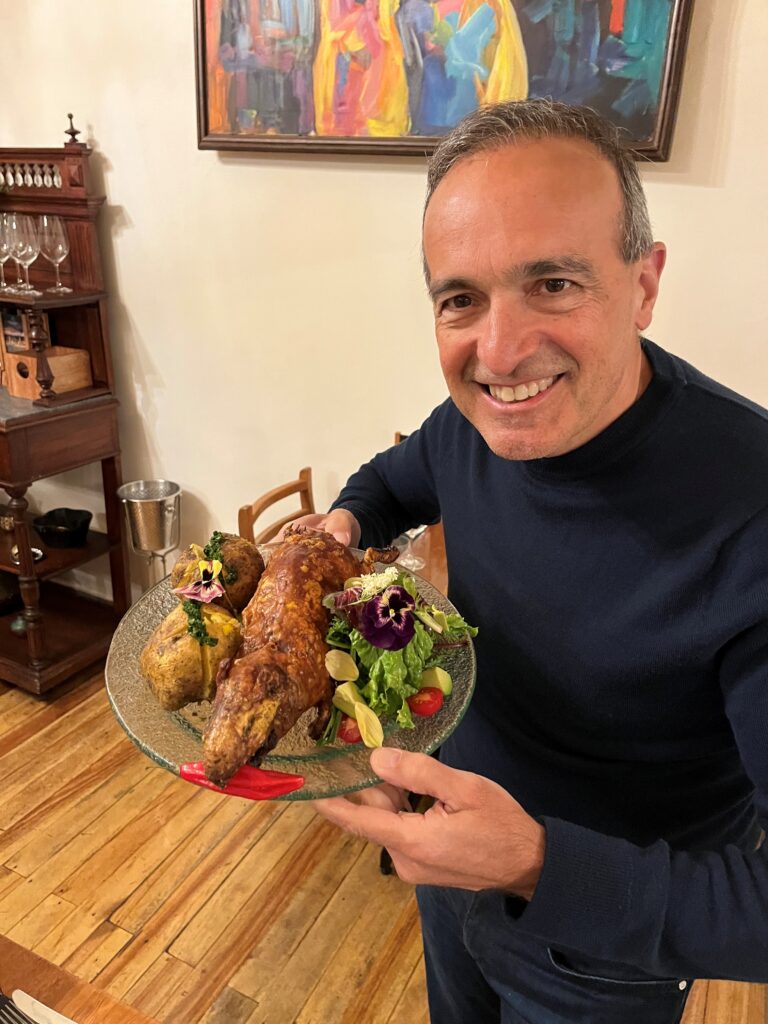
Cuy – The Solution! Who would have suspected that the solution to our nutritional needs and environmental issues is an adorable, furry rodent? The Guinea Pig contains more protein and less fat than chicken or beef (and is much cuter). Raising them requires little space, food, or water, and they reproduce so prolifically that they make rabbits seem barren. And they taste like chicken! While Cathy and I have some anxiety about slaughtering our new pets, knowing it is good for the heart and the planet will overcome our reluctance.
Crimeless
Lima is exceptionally safe. In the tourist districts, I walked around flashing cash, and Cathy was dripping with her finest baubles, without any apprehension whatsoever. Absent are the repeated pickpocket warnings you hear in most European cities. Regretfully, the same is not true in Ecuador. One member of our group had her earrings plucked from her ears in a single moment by a coordinated pack of thieves.
Gridlock in Lima
I would call it awful, but that word does not do the traffic justice. In more ways than one, Shakespeare would lack the words to describe how terrible the traffic is. Fortunately, I can draw a modern-day comparison to Friday afternoon rush hour in New York City. Only my readers in Delhi and Cairo would consider it a trifle. Our tour guide told us they spend as much time in Driver’s Ed learning to use the horn as they do on the steering wheel, and that they have suggestions rather than rules of the road.
US Products
What must Peruvians think of the US based on our exports? They have the misfortune of clogging their arteries on Taco Bell, McDonald’s, Pizza Hut, KFC, and Dunkin’ Donuts cuisine.
The only thing worse than our food is our entertainment. Peruvians hone their English vocabulary and pronunciation skills by watching Love Island, 90 Day Fiancé, My 600-lb. Life, Sister Wives, Pimple Popper, and other lowest-common-denominator shows. The only way they could have a lower opinion of us is if they saw our ridiculously politicized programming masquerading as news.
Cultural Appropriation, Integration, or Accommodation?
In the cathedrals of Cusco and Lima, Christ is wearing a traditional Peruvian skirt on the cross. In paintings of the Last Supper, a Guinea pig, potatoes, and corn are included in the Passover meal. Of course, these local symbols are not included for their accuracy but to provide local context.
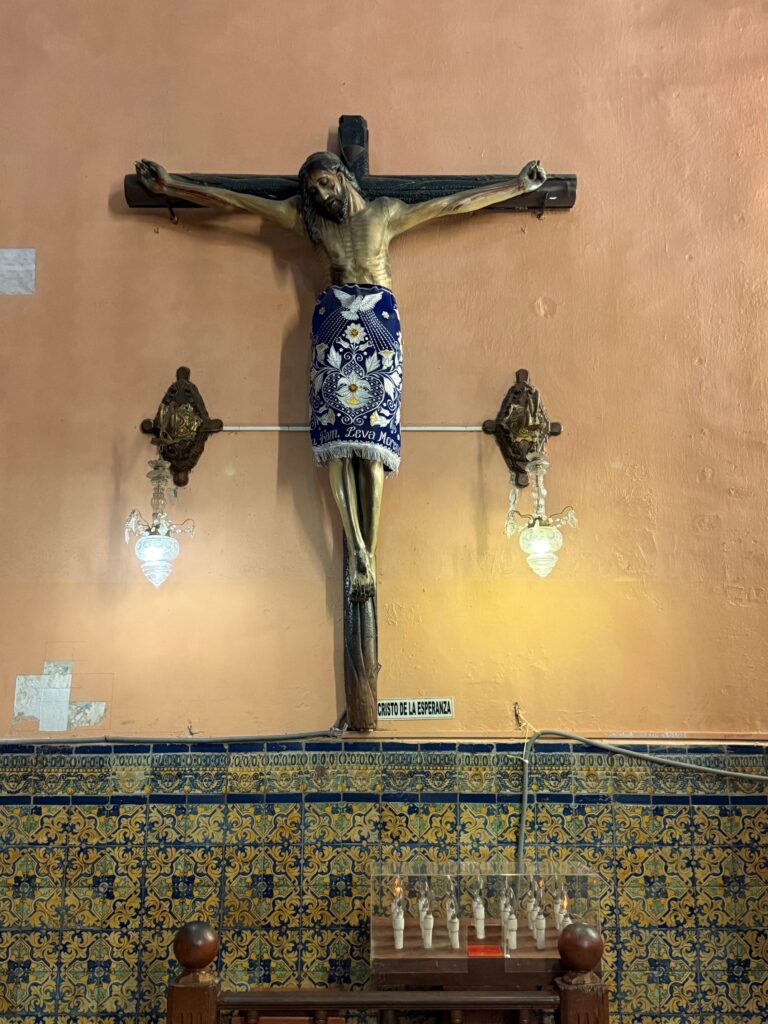
Are these local additions as objectionable as portraying Jesus as a lily-white European? Or can these adaptations facilitate acceptance of the faith without offending those purists who insist on cholent and charoset?
The Facilities
Since one of the first sentences you learn in any foreign language is about their location, they must be important enough to merit a report. Every restroom, including the roadside rest stops, was very modern and spotless, but not always well-provisioned (carry some tissues). They are far superior to their Western European counterparts.
Landscape Architecture
Judging from what sprouts from most buildings, rebar, the steel rods used to reinforce concrete, is the national flower. In the countryside, in Cusco, and even in Lima, flowering rebar makes many buildings look as if they are in a perpetual state of construction.
The rebar is partly explained by pay-as-you-go construction practices, since long-term mortgage financing is generally unavailable. Delaying the imposition of property taxes and reducing appraised values are additional reasons to keep construction unfinished.
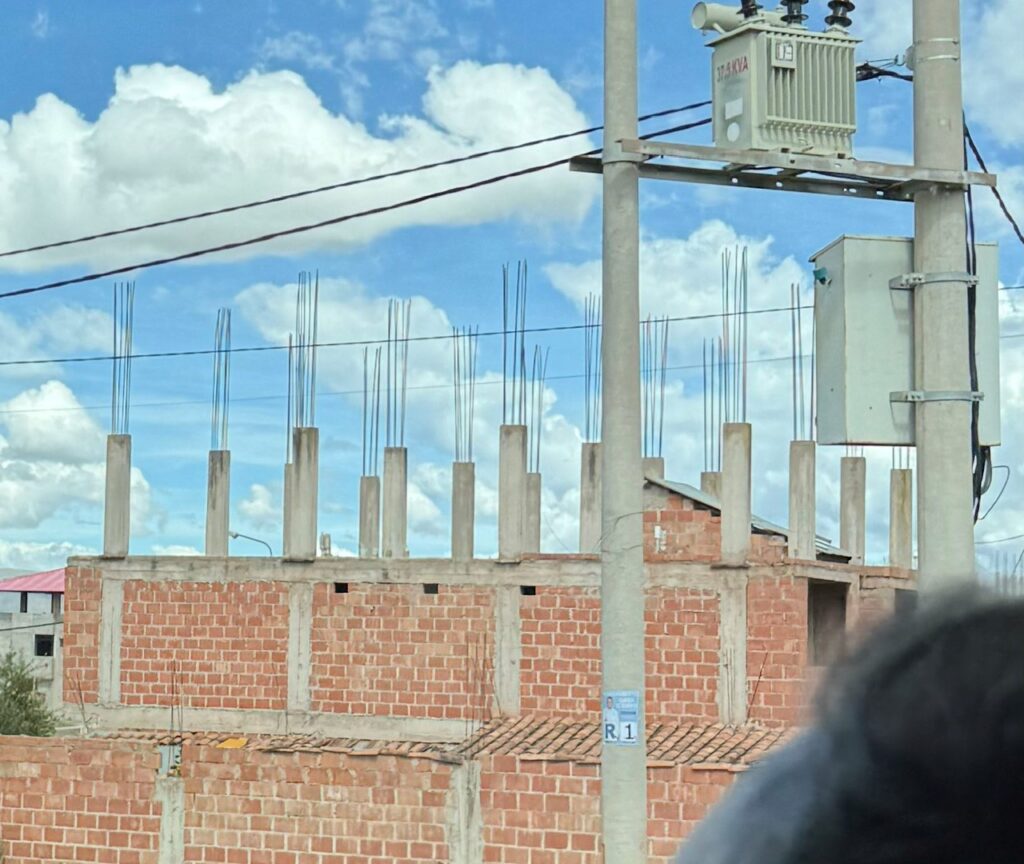
There are also no master plans or zoning regulations. Buildings of every size, shape, and color line every street. Ironically, Ollantaytambo, one of the oldest surviving Inca towns, was meticulously designed and built, with an elaborate water distribution and drainage system.
Elsewhere, most buildings look tired, with flaking paint and cracked stucco. Even modern buildings with large plate-glass windows are often foggy because of broken seals. But do not mistake weathered for dirty. Throughout the country, especially in Lima, we found immaculate streets.
One final oddity. Day and night, the apartment buildings seem to operate under wartime blackout rules. The doors are sealed shut, and little light escapes from the interiors. The effect is so profound that the buildings often appear uninhabited. I do not know whether the fortress-like conditions are due to privacy concerns, noise reduction, or electricity savings. Perhaps everyone is in their cars?
World’s Largest Smoke Break.
On Friday morning, we noticed thousands of office workers gathered outside their office buildings, milling around and socializing. We soon learned they were participating in periodic earthquake drills because Peru is prone to earthquakes, including one in 1970 that killed nearly 70,000. There is even a devotion to the Lord of the Earthquakes dating back to the 17th century.
Medicare Planning(?)
Given the frequent travel (literally planes, trains, and automobiles), the fast-paced itinerary, the altitude, and the extensive climbing of steps and walking on uneven paths, I suggest taking the trip before your Medicare card arrives. Most in our group were in their 70s, and all made it, but they would have welcomed a few fewer years of joint stiffness and a higher VO2 max in their lungs.
(Not) Strange Bedfellows
For the same reasons you need to take this trip before you are 65, I recommend using a reliable tour operator to guide you on this two-week trip. Yes, this means you will be grouped with strangers and risk encountering that one annoying, talkative, always-tardy person who ruins it for everyone. Fortunately, those who embark on these journeys are experienced travelers who play well with others, i.e., are old enough to know better.
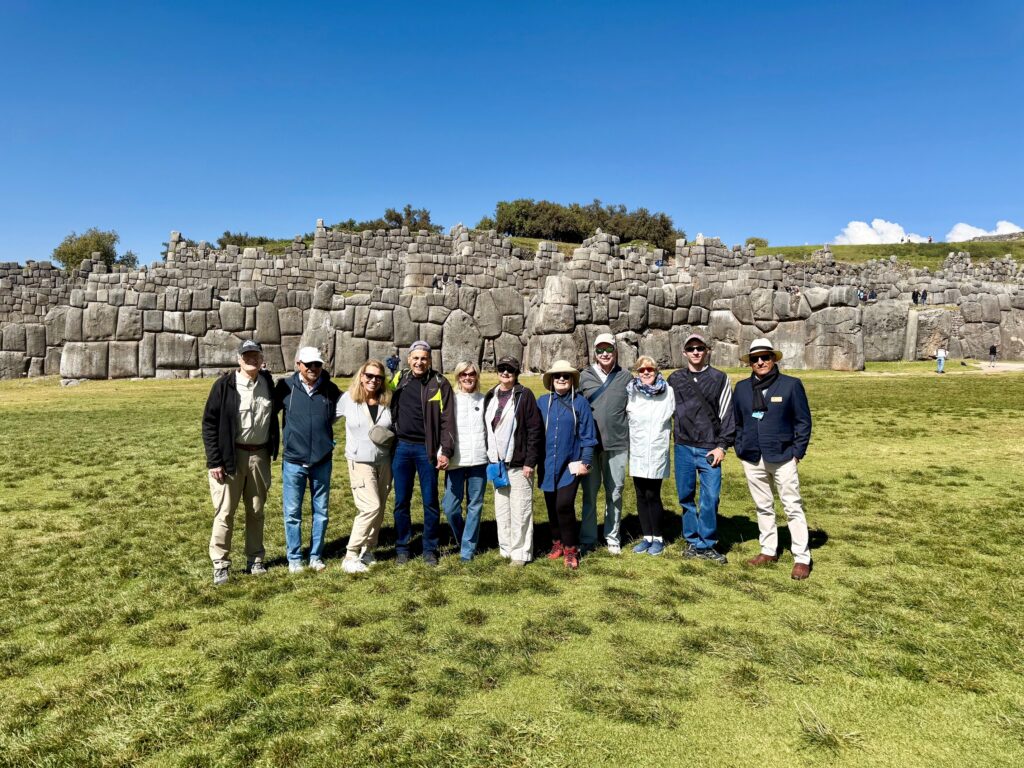
Our tour guides and traveling companions were made up of the most pleasant, friendly, and interesting souls. Rather than taking away, each person helped make the experience better than it would have been without them. I am glad we did not do it alone.
The Wandering Worshipper
Unfortunately, I broke this year’s perfect attendance record on the first Sunday. The following Sunday, I attended English-speaking services at the Union Church of Lima. Check my social media for a video report.
Gratitude
While there is gratitude in everything, this trip provided an extra measure of it. As much as I am able, I am thankful for the natural beauty I saw, the people who transformed it into fascinating places, the hospitality I encountered at every turn, the people I shared it with, and the good health and resources that made such a trip possible.
________________________________________
Alas, I nearly doubled my usual word count, and half of my words did not make it into this post.
Please let me know whether you enjoyed these last two travel-oriented posts, or should I stick to sharing my wisdom? Damned if you do, damned if you don’t?